How to Use DDNS for External Access to NAS?
When your network has a public IP address (IPv4/IPv6), the TerraMaster system provides DDNS (Dynamic Domain Name System) support. This allows you to bind your DDNS domain name to the public IP address, enabling you to access your NAS device via a domain name without needing to remember complex IP addresses.
What is DDNS?
DDNS (Dynamic Domain Name System) allows a registered domain name (e.g., example.dyndns.org) to be dynamically mapped to your public IP address, whether IPv4 or IPv6. This way, you can access your TerraMaster NAS via a domain name (e.g., mynas.zxc) without having to check the public IP address each time. For example, if your public IPv4 address is 119.119.119.248, you can access your NAS using the domain name mynas.zxc, without directly using the IP address.
How to Confirm if Your Network Has a Public IP?
Before using DDNS, you first need to confirm whether your network has a public IP address. You can verify this by following these steps:
- Log in to the Router Management Interface
- Enter your router's IP address (e.g., 192.168.1.1 or 192.168.0.1) in a browser and log in to the router's management interface.
- Locate the IP address under "WAN Port" or "External Network Interface" and note down the displayed IP address.
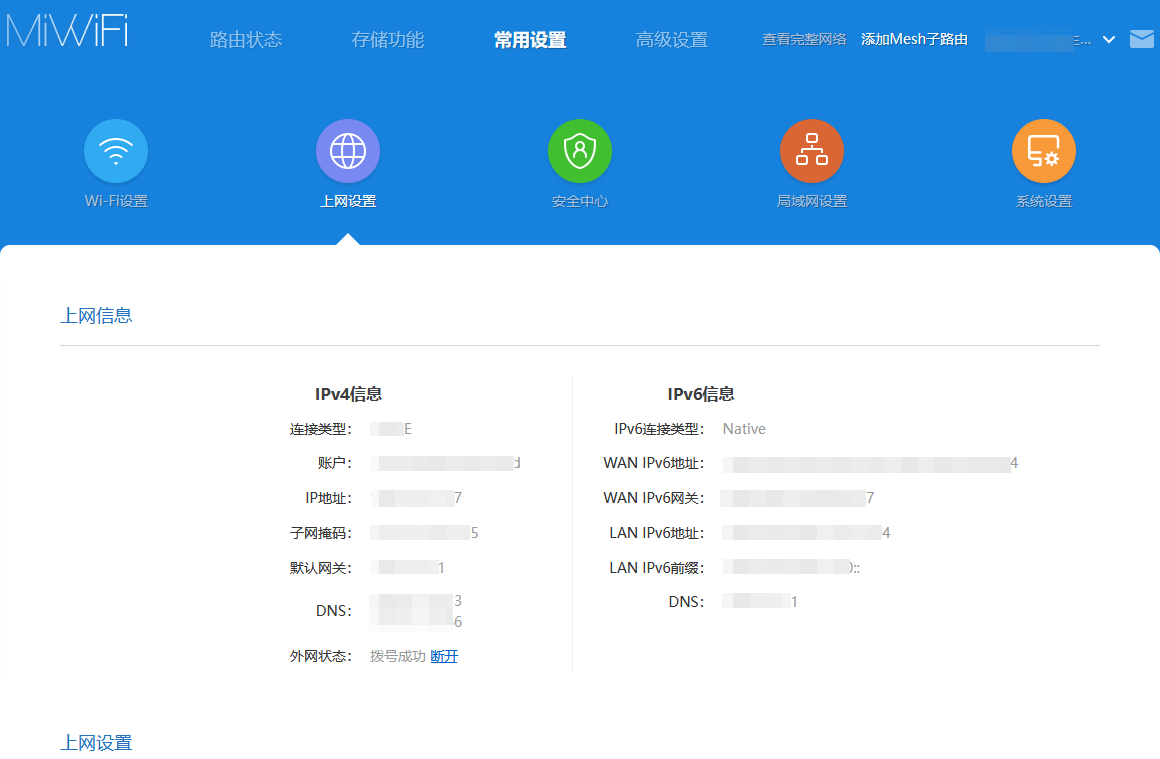
- Confirm if the IP Address is a Public IP
- Open a browser and visit a website like ipw.cn to check your external IP address.
- Compare the IP address shown on your router with the external IP address displayed on the website. If they match, it indicates that your broadband connection uses a public IP address.
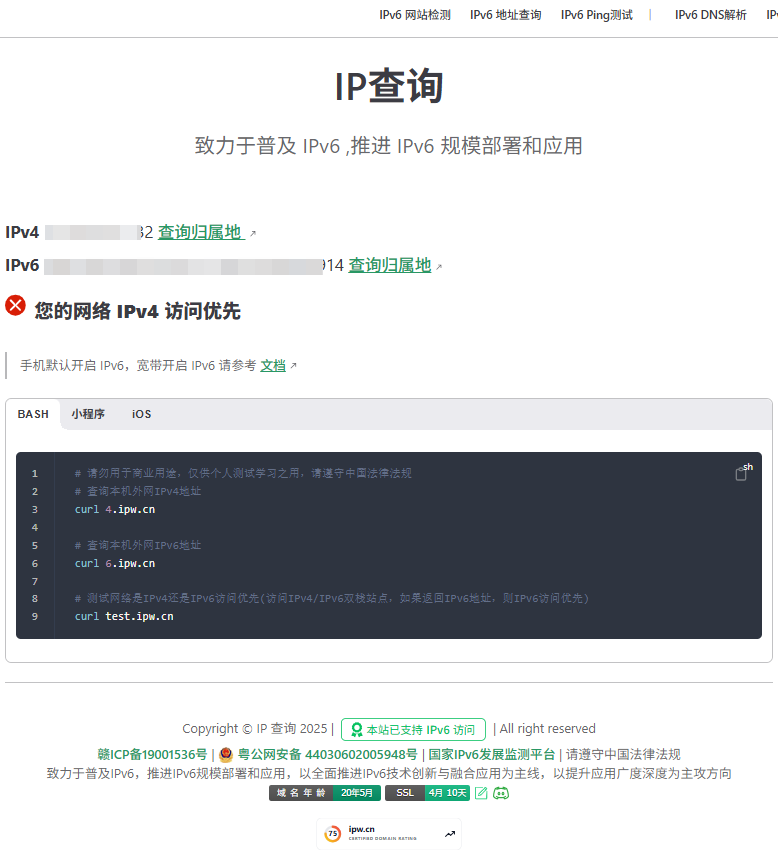
- IPv6 Address Check
- If you need to confirm whether you have a public IPv6 address, you can visit an IPv6-enabled website, such as ipw.cn.
- If it shows "Your network is IPv6 preferred," it means your network supports a public IPv6 address.
What to Do If You Don't Have a Public IP?
-
Contact Your Broadband Operator to Apply for a Public IP
Most home broadband operators assign a private IP address by default, but some operators offer public IP addresses as an additional service. You can contact your operator to inquire about the possibility of obtaining a public IP (IPv4 or IPv6). Please note that operators may require an additional fee. -
Use a DDNS (Dynamic DNS) Service
If your broadband uses a dynamic public IP, you can achieve access to your device via a domain name by using a DDNS service. DDNS automatically updates the DNS record when your public IP address changes, ensuring you can always access your NAS through the domain name.
Common DDNS service providers include:
- Alibaba Cloud
- Tencent Cloud
- DuckDNS
- noip.com
- Cloudflare
- Huawei Cloud DDNS
You can configure the DDNS service in the TerraMaster system under "Control Panel" > "Remote Access" > "DDNS".
- Purchase a Static Public IP
If you need a stable and unchanging public IP, you can contact your operator to apply for a static public IP. A static public IP provides a permanent public access address for your device, usually for an additional fee. This solution is suitable for applications requiring long-term stable connections (e.g., web servers, remote office, etc.).
How to Purchase a DDNS Domain Name?
To use a DDNS service, you need to purchase and configure a DDNS domain name. Here are the steps to purchase and set up a DDNS domain name:
-
Choose a DDNS Service Provider Select a provider that supports DDNS (e.g., No-IP, DuckDNS, Alibaba Cloud, Tencent Cloud, Oray (PeanutHull), Cloudflare, Huawei Cloud DDNS, etc.).
-
Register and Purchase a Domain Name Using Alibaba Cloud as an example to demonstrate the process of purchasing a domain and obtaining an AccessKey. If you choose another domain provider, please refer to their relevant help documentation.
- Open Alibaba Cloud Wanwang, enter the domain name you wish to purchase, check its availability, fill in the required information, and complete real-name authentication.
- Click "Buy Now" and complete the payment process.
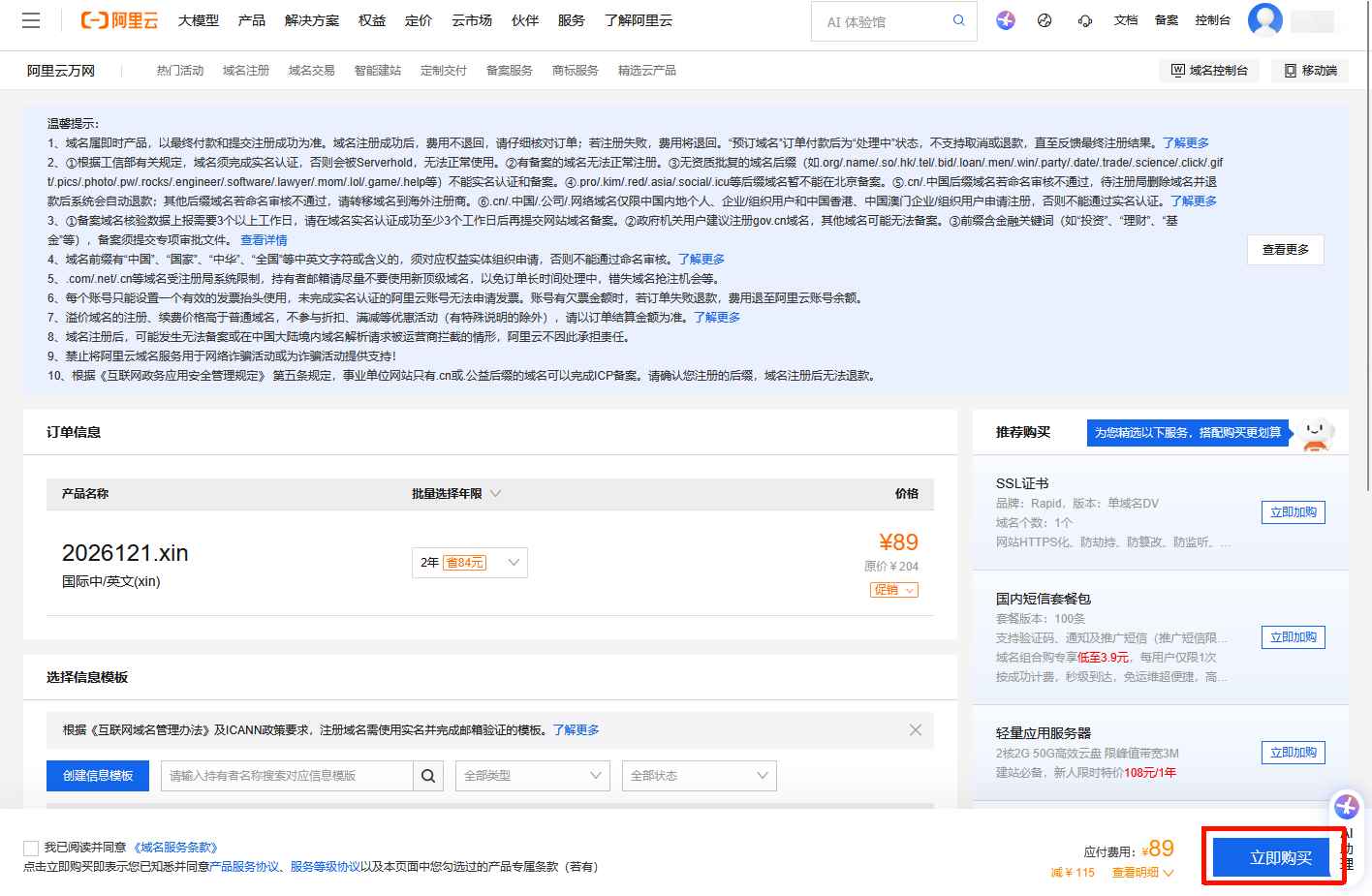
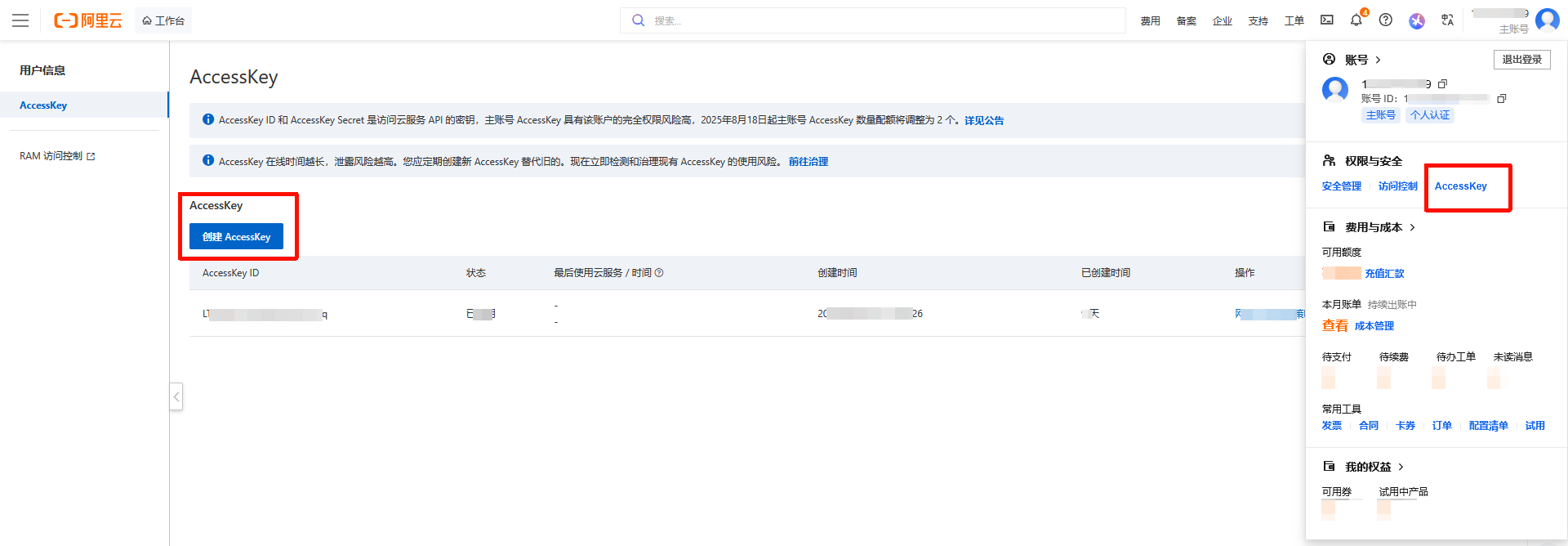
- Click the main account in the upper right corner to enter the "AccessKey" management page. Create a new "AccessKey" and save the "AccessKey ID" and "AccessKey Secret". This information will be used later when configuring DDNS.
How to Configure DDNS on a TerraMaster NAS?
- Log in to the NAS, open "Control Panel", click "Remote Access" > "DDNS".
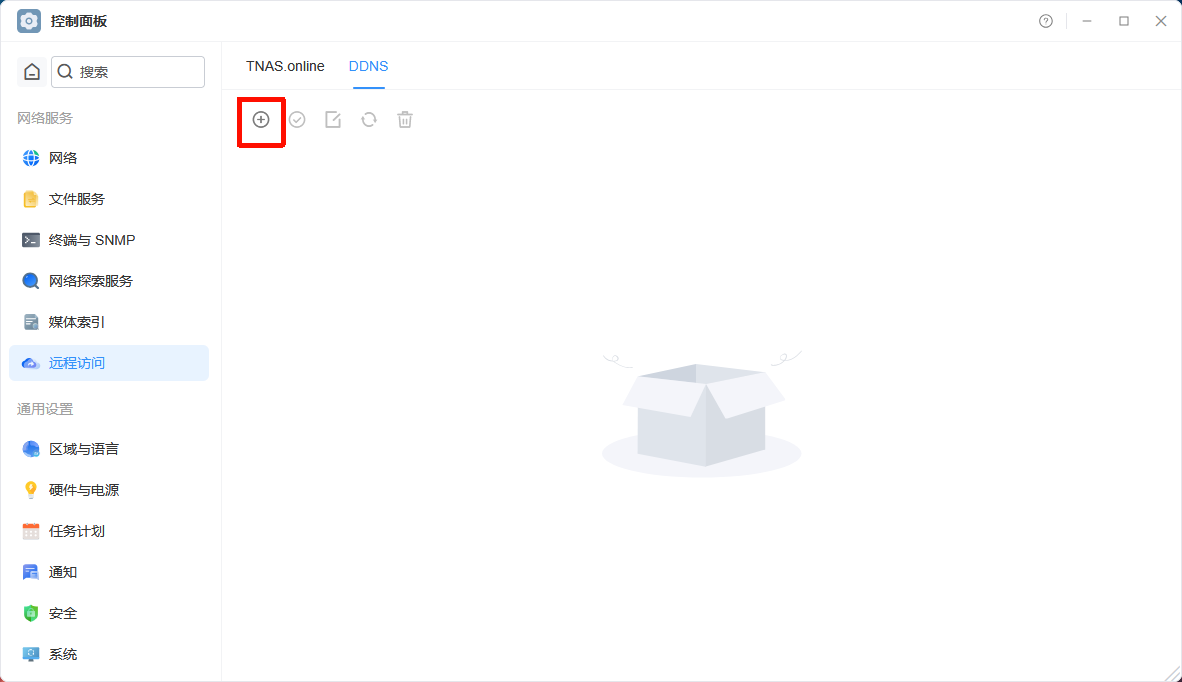
- Click the "Create Icon", select the DDNS service provider you are using, and fill in the "Username", "Password", and "Dynamic Domain Name" (Please fill in according to the registration information provided by your DDNS service provider. If you don't have an account with a DDNS service provider, please register and purchase a domain name first.).
- DDNS Service Provider: Select the DDNS service provider you are using (e.g., dyndsn, noip.com, DuckDNS, Alibaba Cloud, etc.).
- Username: Enter the username provided by the DDNS service provider.
- Password: Enter the password provided by the DDNS service provider.
- Dynamic Domain Name: Enter the DDNS domain name you purchased (e.g., mynas.zxc).
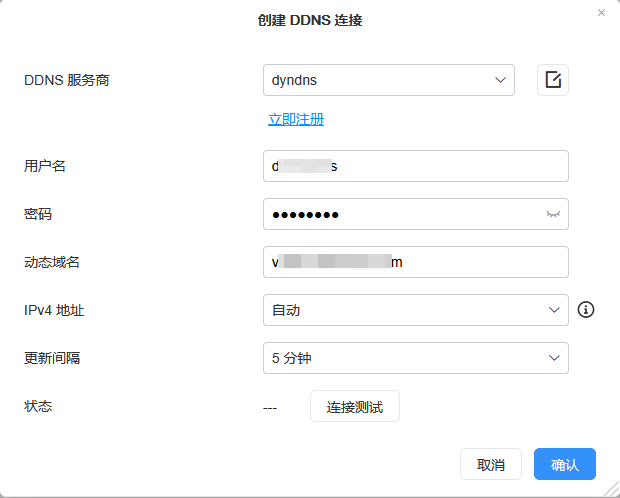
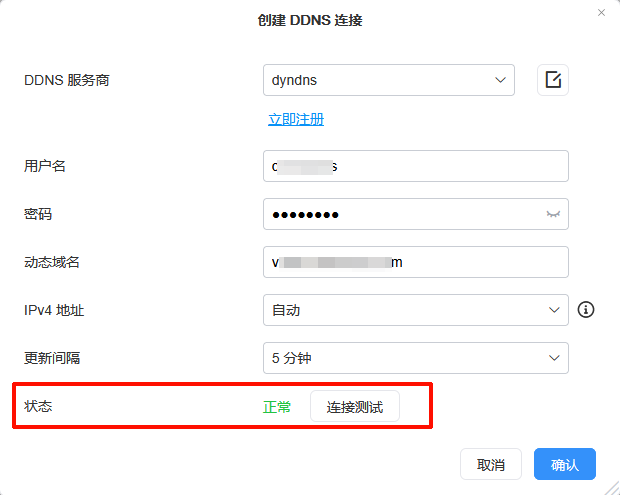
- After filling in, click "Connection Test". Confirm the connection status is normal, then click "Confirm" to save the configuration.
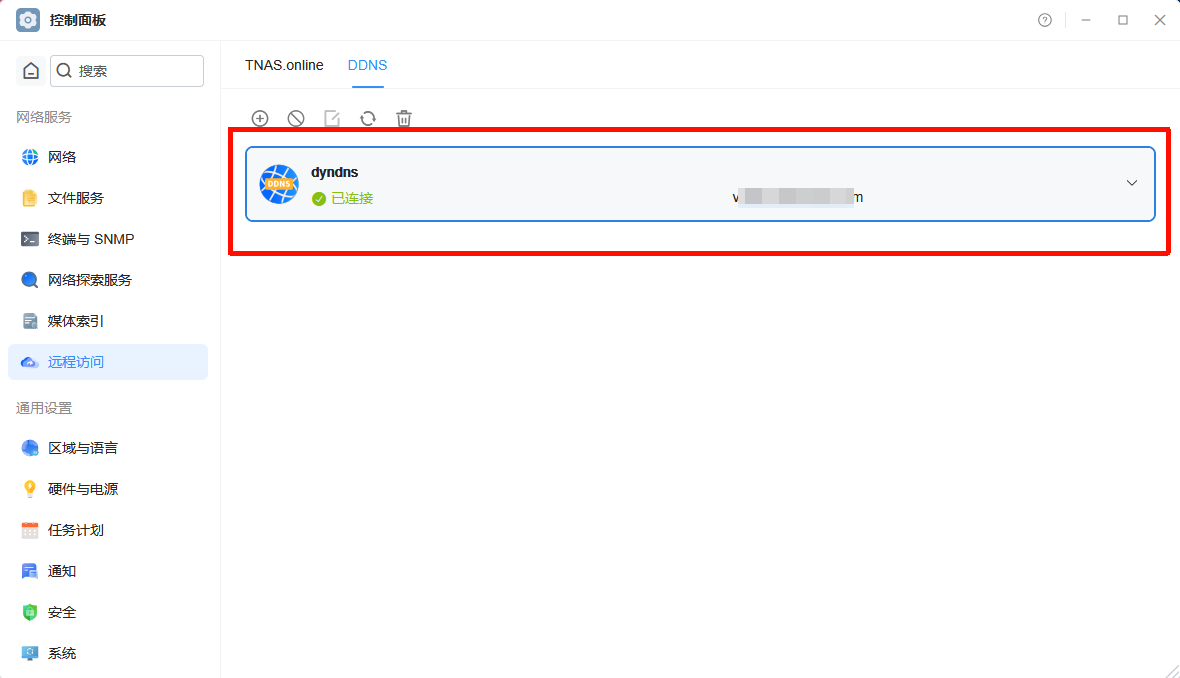
Once added, the NAS system will automatically synchronize the public IP address with your domain name.
Add Port Forwarding Rules
Assuming you want to forward external port 18888 to the NAS's internal port 5443, please fill in the relevant information in the rule configuration. Using a Xiaomi router as an example:
- Log in to the router's backend, go to "Advanced Settings - Port Forwarding" settings, click "Add Rule" and set the following parameters:
- Rule Name: Give this port mapping a name that is easy to remember (e.g., "NAS Remote Access").
- Protocol: Select the default TCP protocol.
- Internal IP Address: Fill in the NAS's local area network (LAN) address (e.g., 192.168.2.70).
- External Port: The port number used by the external network to access the NAS. You can specify it yourself, but ensure it does not conflict with other forwarding rules.
- Internal Port: The port number actually used by the service running on the NAS.
For example:
- External Port: 18888. The working principle is: External access to [External Port 18888] → Router forwards → NAS [Internal Port 5443]
- Internal Port: 5443 If the NAS login port is 5443, fill in 5443 for the internal port. This port is usually consistent with the access port set in the NAS system and generally does not need to be modified.
- Check other routers' port forwarding settings Please note that port forwarding settings may vary for different router brands. If you are using a router from another brand, please refer to the manufacturer's instructions to ensure correct port forwarding configuration.
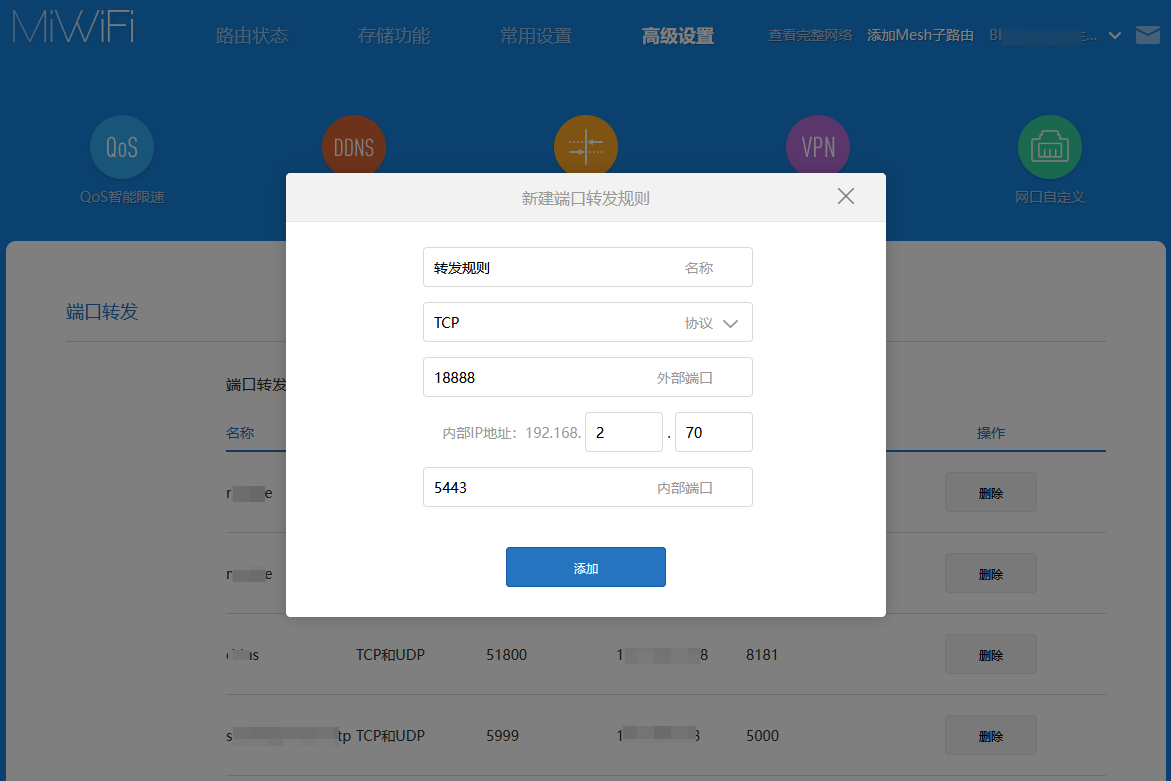
- Click "Add" to complete the port forwarding rule.
Note: To prevent the NAS device's IP address from changing due to router restarts or other reasons, it is recommended to set up a static IP address and MAC address binding in the router.
Setting a Static IP Address to Prevent IP Changes
To prevent the NAS device's IP address from changing due to router restarts or other reasons, it is recommended to set a fixed IP address binding for the NAS in the router. Ensure that the NAS always uses the same LAN IP address after each router restart, thus avoiding port mapping failures or remote access issues.
Steps
- Use a browser to access the router's management backend address.
- Usually, you can find the DHCP configuration under the router's "Network Settings" or "LAN Settings".
- In the DHCP settings, find the "Static IP Address Assignment" or "MAC Address Binding" option.
- Enter the NAS device's MAC address (can be found on the NAS management page or the device itself) and set a fixed IP address (e.g., 192.168.1.111).
- Confirm the configuration is correct and save it.
Note: The setup method may vary slightly for different router brands. Please refer to your router's user manual or consult the router manufacturer's technical support for detailed operating instructions.
Access Verification
After the setup is complete, you can access your DDNS domain name from an external network using a browser in the format (domain name:port number) to verify if you can successfully access the TerraMaster NAS.
For example, if your domain name is mynas.zxc and the port is 18888, the access link would be: https://mynas.zxc:18888